What’s the Difference?
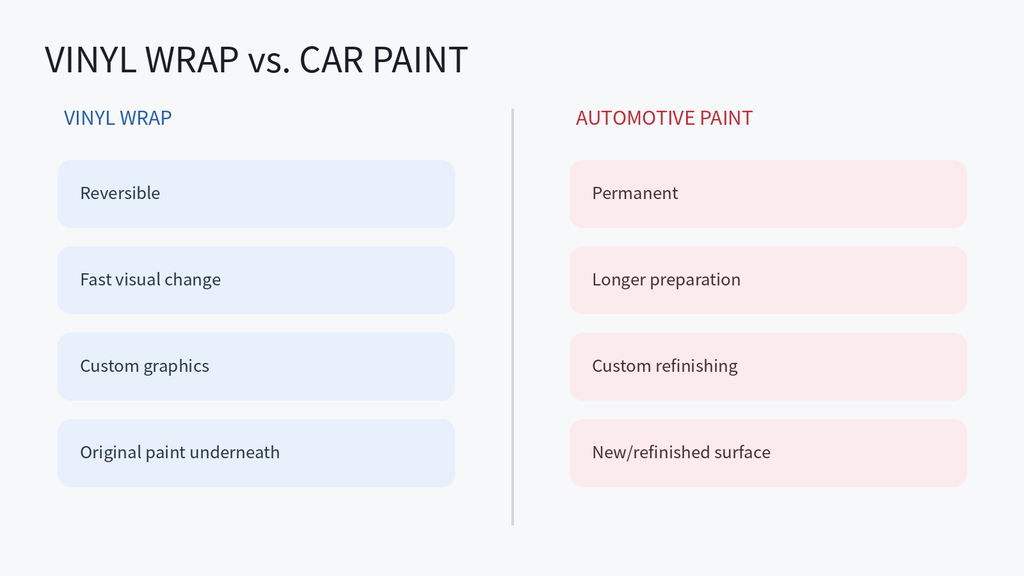
When it comes to changing the appearance of a vehicle, two of the most common options are vinyl car wrap and automotive paint. Both can completely transform the look of a car, but they work in very different ways.
A vinyl wrap can change your vehicle’s color and finish without permanently repainting the body, while automotive paint creates a permanent new finish on the vehicle’s surface.
So, which option is right for your car?
The answer depends on your budget, how long you plan to keep the new appearance, your desired finish, and whether you want the original paint to remain underneath.
In this guide, we’ll compare vinyl car wrap and car paint to help you understand the key differences.
What Is a Vinyl Car Wrap?
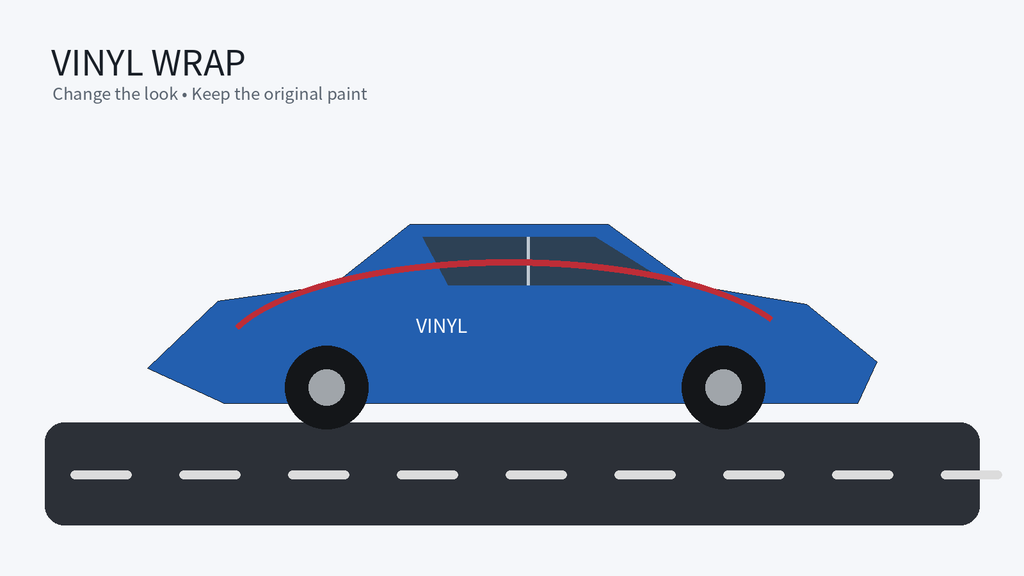
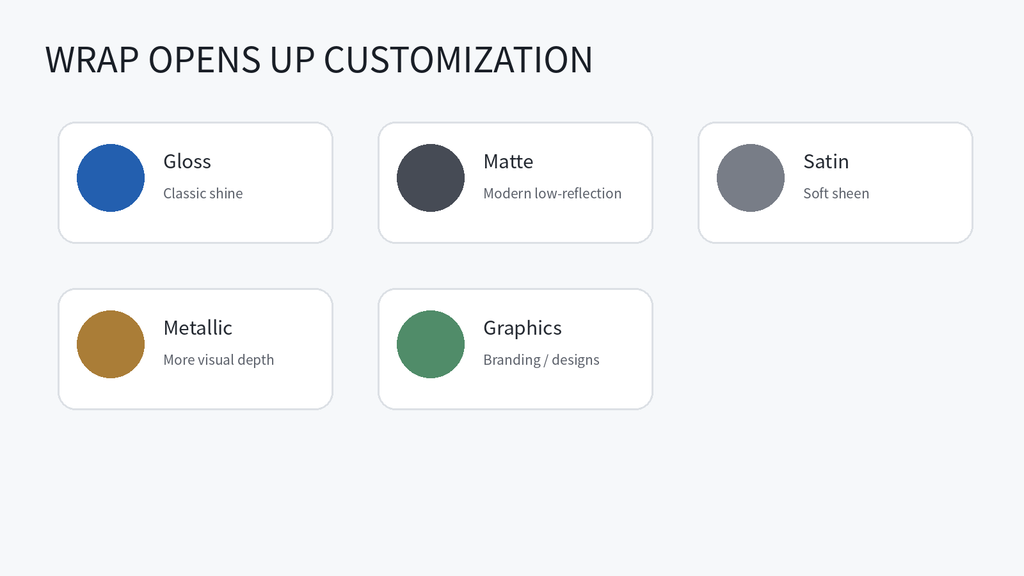
A vinyl car wrap is a flexible, adhesive-backed film designed to cover the exterior surfaces of a vehicle. The film is available in a wide range of colors, textures, patterns, and finishes, including gloss, matte, satin, metallic, and carbon-fiber styles.
Instead of permanently changing the vehicle’s paint, the vinyl film is applied over the existing paintwork.
This means the original color can generally be restored by removing the wrap, provided that the underlying paint is in good condition and the wrap has been properly installed and maintained.
Vinyl wraps are commonly used for:
- Full vehicle color changes
- Partial vehicle wraps
- Commercial vehicle branding
- Racing and motorsport graphics
- Custom designs
- Temporary styling changes
What Is Automotive Car Paint?
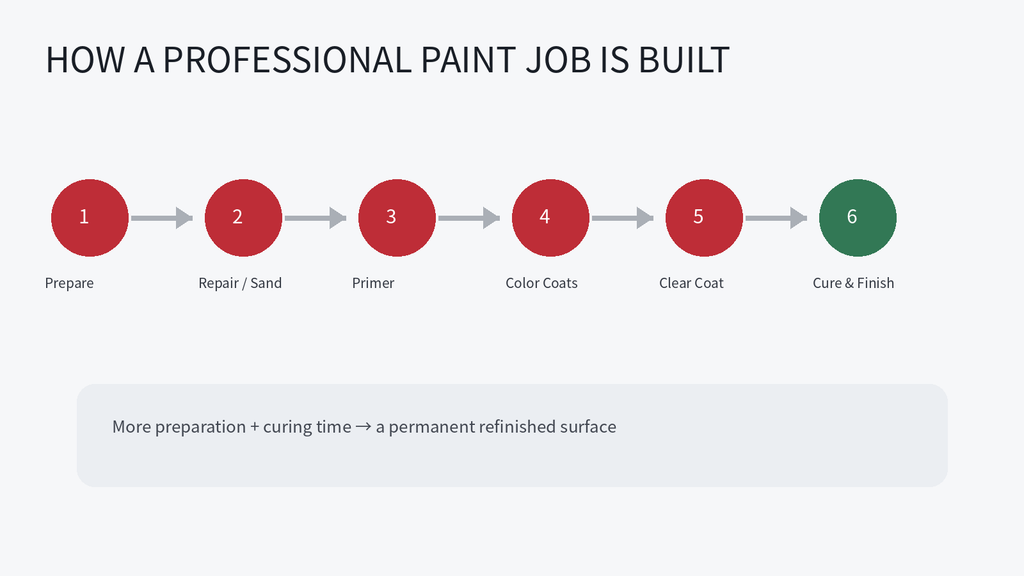
Automotive paint is a permanent coating applied to a vehicle’s body panels. A professional paint job typically involves surface preparation, primer, color coats, and a clear coat.
Unlike vinyl wrap, paint becomes part of the vehicle’s exterior finish. Changing it again requires another refinishing process.
Professional automotive painting is often used for:
- Permanent color changes
- Accident and bodywork repairs
- Vehicle restoration
- Removing severe paint damage
- Factory-style refinishing
- Custom paintwork
Vinyl Car Wrap vs. Car Paint: Key Differences
| Feature | Vinyl Car Wrap | Car Paint |
| Installation | Applied over existing paint | Applied directly to prepared bodywork |
| Reversible | Generally removable | Permanent |
| Color options | Extensive | Extensive |
| Finish options | Gloss, matte, satin, metallic, textured, etc. | Gloss, matte, metallic, custom finishes |
| Installation time | Usually faster | Usually longer |
| Original paint | Remains underneath | Replaced or refinished |
| Custom graphics | Excellent | More complex |
| Maintenance | Relatively simple | Similar to conventional paint care |
| Repair | Individual sections can often be replaced | Damaged areas may require refinishing |
| Best for | Temporary or customizable changes | Permanent refinishing |
1. Appearance and Design Options
One of the biggest advantages of vinyl wrap is the number of design possibilities.
Vinyl wrap manufacturers offer a huge variety of colors and finishes. You can choose a traditional gloss finish, a modern matte finish, a subtle satin look, or a more distinctive metallic or textured appearance.
Wrap film can also be used to create custom graphics and branding.
For example, a business vehicle can combine:
- Company colors
- Logos
- Contact information
- Website addresses
- Promotional graphics
Creating the same design entirely with automotive paint would generally be more complicated and expensive.
### What About Paint?
Automotive paint also offers many color and finish options. A professional body shop can create custom colors, metallic effects, pearlescent finishes, and other specialized appearances.
However, once the vehicle is painted, changing the color again requires another painting or refinishing process.
2. Installation Time
The installation process is another major difference.
A full vehicle vinyl wrap can often be completed in a relatively short period, depending on the size and complexity of the vehicle, the condition of the paint, the film being used, and the installer’s experience.
Painting usually involves more preparation and curing time.
A professional paint job may require:
- Removing or masking vehicle components
- Sanding and preparing the surface
- Repairing imperfections
- Applying primer
- Applying color coats
- Applying clear coat
- Allowing the finish to cure
- Polishing and finishing
For this reason, vehicle owners looking for a relatively quick visual transformation may consider vinyl wrapping.
3. Cost
The cost of wrapping or painting a vehicle can vary significantly.
For vinyl wrap, the final price depends on factors such as:
- Vehicle size
- Vehicle design
- Type of wrap film
- Film quality
- Full or partial wrap
- Installation complexity
- Installer experience
A professional paint job can also vary greatly depending on:
- Paint quality
- Amount of preparation required
- Body repairs
- Number of coats
- Type of paint
- Vehicle size
- Labor costs
- Shop location
A basic paint job and a high-end custom paint job can have dramatically different prices.
Therefore, it is important to compare quotes based on the **same level of preparation and finish**, rather than comparing the price of a simple wrap with the price of a premium custom paint job.
4. Durability and Lifespan
Both vinyl wrap and automotive paint can last for years when properly installed and maintained.
However, their durability depends on different factors.
Vinyl wrap can be affected by:
- UV exposure
- Extreme temperatures
- Road contaminants
- Improper washing
- Harsh chemicals
- Poor installation
- Physical damage
Paint can also fade, oxidize, scratch, chip, or deteriorate over time due to environmental exposure.
The lifespan of a vinyl wrap depends heavily on the film’s quality, installation, maintenance, and environmental conditions. For this reason, manufacturers’ specifications should always be checked for the specific product being considered.
5. Protection for the Original Paint
This is one area where vinyl wrap has a unique advantage.
Because the film is installed over the original paint, it can act as an additional surface layer and help shield the paint from everyday environmental exposure.
However, vinyl wrap should not be considered equivalent to **Paint Protection Film (PPF)**.
Standard color-change vinyl is primarily designed to change the appearance of the vehicle, while PPF is specifically engineered for physical paint protection, including resistance to certain impacts and stone chips.
If your primary goal is paint protection, PPF may be a more appropriate solution.
6. Can You Return to the Original Color?
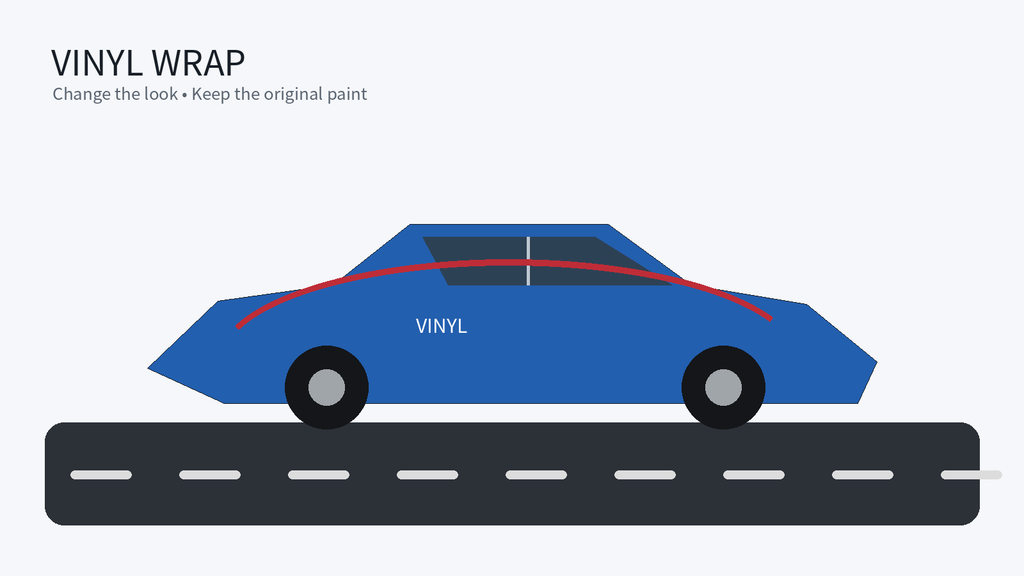
With vinyl wrap, you can generally remove the film and reveal the original paint underneath.
This makes wrapping particularly useful for:
- Leased vehicles
- Temporary color changes
- Vehicle enthusiasts
- Business vehicles
- Owners who may sell the vehicle later
- Drivers who like changing their vehicle’s appearance
Paint does not offer the same flexibility.
Once a vehicle has been repainted, returning to the original factory color requires another refinishing process.
7. Repairs and Maintenance
Vinyl wrap and paint are also different when it comes to repairs.
If a small section of a wrapped vehicle becomes damaged, it may be possible to replace only the affected section, depending on the location and film design.
With painted surfaces, repairs may require sanding, repainting, blending, and clear-coating the affected area.
However, matching an older wrap can sometimes be challenging, particularly if the film has experienced fading or environmental wear.
For both options, regular maintenance is important.
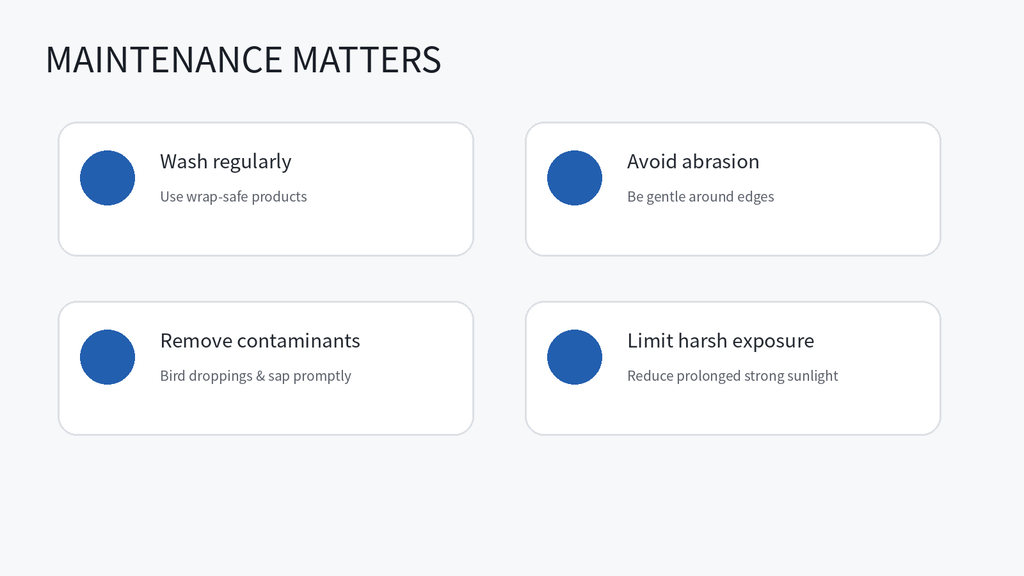
### Vinyl Wrap Maintenance
To maintain a wrapped vehicle:
- Wash it regularly
- Use wrap-safe cleaning products
- Avoid abrasive materials
- Avoid aggressive pressure washing around edges
- Remove bird droppings and tree sap promptly
- Reduce prolonged exposure to strong sunlight when possible
### Paint Maintenance
Paint can generally be maintained with:
- Regular washing
- Waxing or paint sealants
- Polishing when appropriate
- Ceramic coatings
- Prompt removal of contaminants
8. Which Option Is Better for Customization?
9. Which Option Is Better for Resale?
This depends on the vehicle and its condition.
One potential advantage of vinyl wrapping is that the original factory paint can remain underneath the film. When the wrap is removed correctly, the original color may still be visible.
This can be useful for owners who want to customize their car while retaining the original finish.
However, buyers may have different preferences, and the condition of both the wrap and the underlying paint should be considered.
A professionally installed, well-maintained wrap may present very differently from a poorly installed or heavily damaged wrap.
10. Vinyl Wrap or Paint: Which Should You Choose?
There is no universal answer. The right choice depends on what you want to achieve.
### Choose Vinyl Car Wrap If You Want:
A reversible color change
Extensive color and finish options
Custom graphics or branding
A relatively fast visual transformation
The ability to return to the original paint
A temporary styling solution
### Choose Car Paint If You Want:
- A permanent color change
- Bodywork and paint repair
- Vehicle restoration
- Factory-style refinishing
- A long-term permanent finish
- Extensive restoration of damaged surfaces
Final Comparison
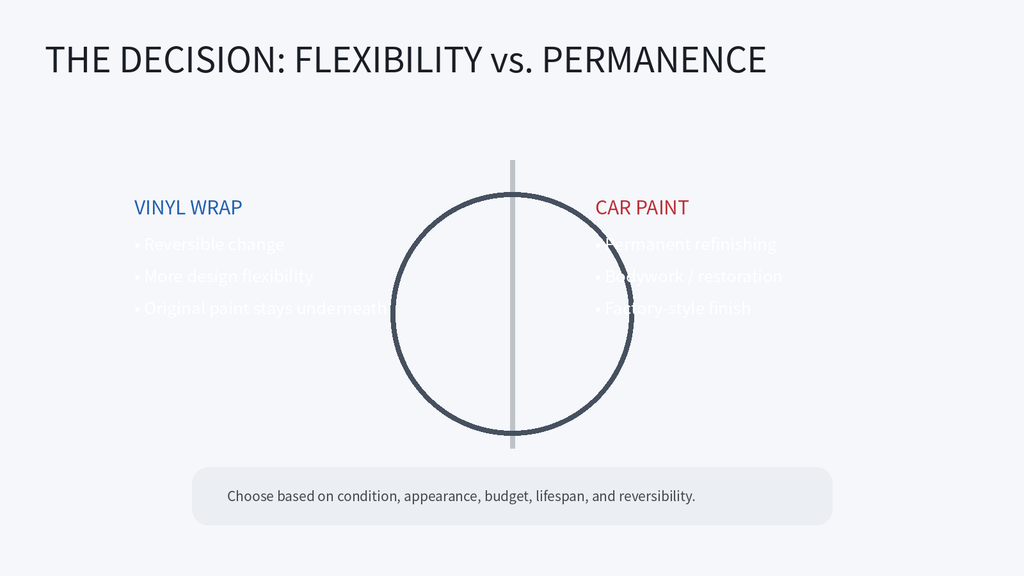
The decision between vinyl car wrap and car paint ultimately comes down to **flexibility versus permanence**.
Vinyl wrap gives vehicle owners the freedom to change colors and finishes while keeping the original paint underneath. It is particularly useful for customization, branding, temporary styling, and reversible color changes.
Automotive paint, on the other hand, creates a permanent finish and can be the better choice when a vehicle needs bodywork, restoration, or a permanent refinishing process.
Before making a decision, consider your vehicle’s current condition, your desired appearance, your budget, how long you want the new finish to last, and whether you may want to return to the original color in the future.
For many vehicle owners, the choice isn’t simply about which option is better—it’s about **which solution better fits the way they use and maintain their vehicle**.
发表回复